
Key takeaways
- Two days is enough to see Pisac, Ollantaytambo, Maras, Moray and Chinchero without rushing, if you base yourself in the valley.
- Spend day one on the Pisac side and day two on the Ollantaytambo and Maras-Moray side to cut driving time.
- The Boleto Turistico Circuit III covers Pisac, Ollantaytambo, Chinchero and Moray, but Maras salt mines charge a separate cash entry.
- The Sacred Valley sits lower than Cusco, so sleeping here helps you acclimatize before Machu Picchu.
Two days is the sweet spot for the Sacred Valley: enough time to walk the terraces at Pisac, climb the Ollantaytambo fortress, stand above the salt pools at Maras and watch weavers at work in Chinchero, without feeling like you spent the whole trip in a van. This Sacred Valley itinerary splits those sites across two logical days so you drive less and see more, and it slots neatly into the days before you take the train to Machu Picchu.
The valley follows the Urubamba River northwest of Cusco. Because it sits lower than the city, most travelers come here first to adjust to the altitude. Below is a day-by-day plan, the practical tickets you need, and how the whole thing connects to your Machu Picchu visit.
Day 1: Pisac Ruins and the Artisan Market
Start on the Pisac side of the valley, roughly 43 km and an hour and ten minutes north of Cusco. The town of Pisac sits at about 2,972 meters, and the ruins climb the ridge above it.
The Pisac archaeological site is often underrated next to Machu Picchu, but it rewards the walk. The main complex sits around 3,350 meters, with a lookout point higher still, and the hillside below holds roughly 500 agricultural terraces stacked in long green curves. Give yourself a couple of hours to walk the ceremonial sector, the terraces and the cliff with its Inca tombs.
After the ruins, drop into the Pisac artisan market in town. On market days the plaza fills with alpaca textiles, silver, ceramics and produce from nearby communities. It is a good place to buy a scarf or blanket directly from makers, and prices are generally friendlier than in Cusco. Eat lunch here before moving on.
If you have energy left, spend the late afternoon easing into the valley rather than packing in another ruin. The point of day one is to walk, breathe the thinner air and let your body settle.
Day 2: Ollantaytambo, Maras and Moray
Day two covers the western end of the valley. Ollantaytambo is about 72 km from Cusco by road, and it is both a major site and a working town.
Ollantaytambo Fortress and Old Town
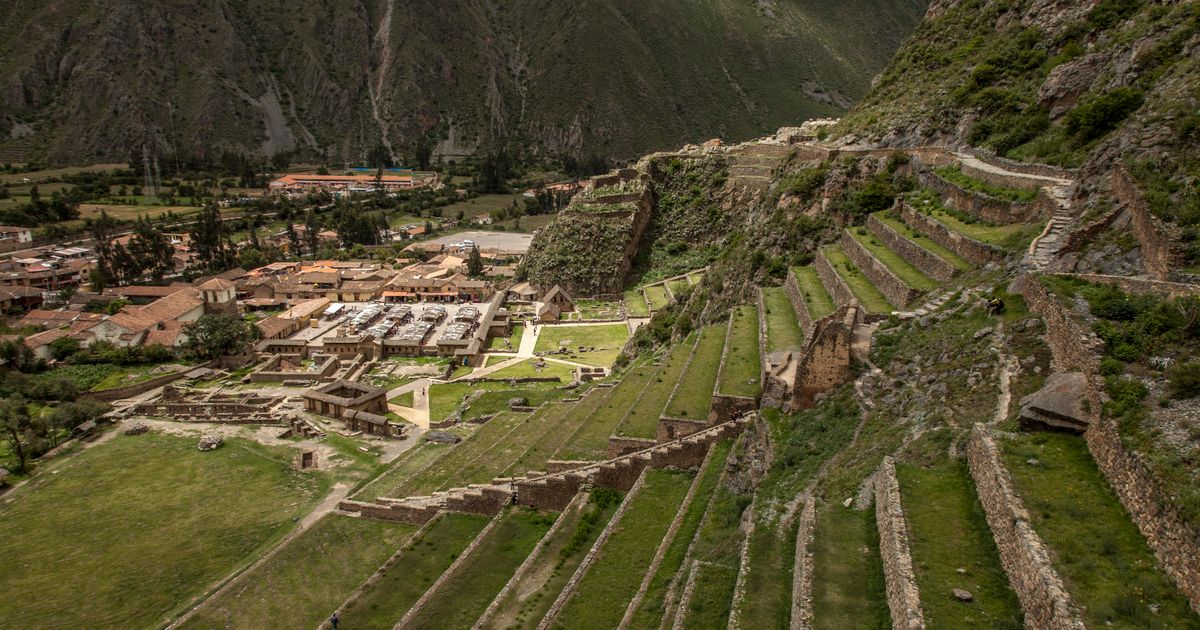
The Ollantaytambo fortress rises in steep terraces above the town, built to guard the entrance to the valley. The Temple of the Sun at the top uses enormous pink granite blocks hauled from a quarry across the river, fitted so tightly that the joints have survived centuries of earthquakes. Climb the terraces for the view back over the rooftops and the opposing hillside, where you can still make out old storehouses cut into the rock.
The old town below is one of the few places where people still live inside the original Inca street grid. Narrow cobbled lanes, stone water channels and trapezoidal doorways make it worth wandering on foot before or after the site. This is also where you will likely catch your train later in the trip, so it pays to know the layout.
Maras Salt Mines and Moray Terraces
A short drive away, two very different Inca-era sites sit close together. The Maras salt mines, or salineras, are a hillside of roughly 5,000 shallow salt pools fed by a naturally salty spring. Local families have harvested salt here since pre-Inca times, and the terraced white pans against the red earth make one of the valley's most photographed scenes. Note that Maras is not covered by the Boleto Turistico and charges a separate community entrance fee, payable in cash soles.
Nearby Moray is a set of concentric circular terraces sunk into the ground on a plateau at about 3,500 meters. The largest bowl drops around 30 meters, and the design creates a temperature difference of as much as 15 degrees Celsius between the top and bottom rings, which many researchers read as an Inca agricultural testing ground for different crops and microclimates. You can read more about the site's construction and climate on its Moray reference page. Standing on the rim, the terraces look less like ruins and more like a quiet experiment left running for 500 years.
Chinchero Weaving Traditions
On the way back toward Cusco, stop in Chinchero, a highland town known for its weaving cooperatives. Here women demonstrate the full process: washing raw alpaca and sheep wool, dyeing it with natural ingredients like cochineal and local plants, then weaving on backstrap looms. The colors come entirely from the land, and a short demonstration makes the textiles in every market suddenly make sense. Chinchero also has a colonial church built on Inca foundations and wide terraces that catch the late light. It is a calm place to end two busy days.
Sacred Valley Itinerary: Tickets, Transport and Timing
A few practical notes make this two-day plan run smoothly.
- Boleto Turistico: The partial Circuit III ticket covers Pisac, Ollantaytambo, Chinchero and Moray, which is most of this plan. The full integral ticket adds Cusco-area sites and lasts ten days. Buy it at the first site or in Cusco.
- Maras: Budget a separate cash fee in soles for the salt mines, since they sit outside the Boleto system.
- Getting around: Private transport or a guided tour lets you link Maras, Moray and Chinchero in one loop, which is awkward by public van. Colectivos work well for the main towns if you have more time than budget.
- Where to sleep: Staying in the valley, in Urubamba, Pisac or Ollantaytambo, saves the back-and-forth to Cusco and keeps you at a gentler altitude.
If you would rather not juggle the logistics, a local operator such as Discover Inca Planet can bundle the two days into a single guided route with transport, entrance timing and a guide who can explain each site. That is often the difference between seeing the valley and understanding it.
How the Valley Fits Before Machu Picchu
The Sacred Valley is the natural warm-up for Machu Picchu, and not only for the scenery. Because the valley floor sits lower than Cusco, spending a night or two here helps your body adjust before you climb at altitude, which cuts the odds of feeling rough on your big day. For a fuller breakdown of when conditions are best, see our guide to the best time to visit Machu Picchu.
There is a logistical reason too. The train to Machu Picchu leaves from Ollantaytambo, so ending your valley days there puts you right at the departure point. Plan your entry tickets and train times in advance, as both sell out in high season. Our step-by-step Machu Picchu booking guide walks through the order to reserve things.
Once you have your two valley days mapped, lock in your Ollantaytambo accommodation and your train seats for the following morning. That single booking turns a loose plan into a smooth, acclimatized run straight into Machu Picchu.
Frequently asked questions
Is 2 days enough for the Sacred Valley?
Yes. Two days lets you cover Pisac, Ollantaytambo, Maras, Moray and Chinchero at a reasonable pace. One day only works if you skip one or two sites.
Do I need the Boleto Turistico for the Sacred Valley?
You need it for Pisac, Ollantaytambo, Chinchero and Moray, which are covered by the partial Circuit III ticket. Maras salt mines are not on the Boleto and charge a separate cash fee.
Should I visit the Sacred Valley before or after Machu Picchu?
Before. The valley sits lower than Cusco, so a night or two here helps you acclimatize, and Ollantaytambo is where the train to Machu Picchu departs.
How do I get from Cusco to the Sacred Valley?
Pisac is about 43 km from Cusco, a drive of roughly an hour and ten minutes. Ollantaytambo is about 72 km by road. Private transport, a guided tour or colectivo vans all work.


3 Responses