
Key takeaways
- Chinchero is a high Andean village about 3,750 m (12,303 ft) above sea level, roughly 350 m higher than Cusco, famous for living backstrap weaving traditions.
- A cooperative demonstration shows the full process, from washing raw alpaca fleece to spinning, natural dyeing with plants and cochineal, and weaving on a backstrap loom.
- The colonial Church of Our Lady of Monserrat sits on Inca foundations above a plaza ringed by original agricultural terraces.
- Chinchero pairs naturally with Maras, Moray and Ollantaytambo on a one or two day Sacred Valley route.
- Buy directly from weaving cooperatives so more of the money reaches the artisans and the tradition stays funded.
Chinchero is a high Andean village between Cusco and the Sacred Valley where families still weave by hand, using the same backstrap looms and plant dyes their grandparents used. If you want to see how Peruvian textiles are actually made, this is one of the best places to do it. The Chinchero weaving village also holds a colonial church built on Inca stone, a wide market plaza, and farming terraces that have held their shape for centuries.
Most visitors come through on a Sacred Valley tour and stay an hour or two. That is enough for a weaving demonstration, the church, and the terraces. Below is what to see, how it fits a wider itinerary, and how to buy textiles in a way that supports the people making them.
Why is the Chinchero weaving village special?
The Chinchero weaving village earns its name because weaving here is still a daily craft, not a museum display. Families spin fleece, dye yarn with local plants, and weave on backstrap looms passed down through generations. The patterns carry meaning tied to community, landscape and Andean cosmology, and children often learn the basics before they finish school.
The craft survived because of organized effort as much as tradition. The Center for Traditional Textiles of Cusco runs a weaving center in Chinchero as an extension of its wider work, with climate-controlled storage for its textile collection and dedicated space for its stores of natural dyes (Andean Textile Arts, 2024). That kind of investment is why visitors can watch techniques that had nearly disappeared elsewhere.
Weavers here practice several methods, including plain backstrap weaving, double-faced weaving, sling braiding and tubular border work. Each produces a different texture and pattern, and a single finished piece can take days or weeks.
What happens at a cooperative weaving demonstration?
A cooperative demonstration walks you through the whole process from raw fleece to finished cloth, usually in 20 to 40 minutes. It is the clearest way to understand why handwoven Andean textiles cost what they do. The weaver explains each step in Quechua or Spanish, often with a guide translating.
The sequence is consistent across most cooperatives:
- Washing: Raw alpaca or sheep fleece is cleaned with a root that lathers like soap.
- Spinning: Fleece is spun into yarn by hand using a drop spindle.
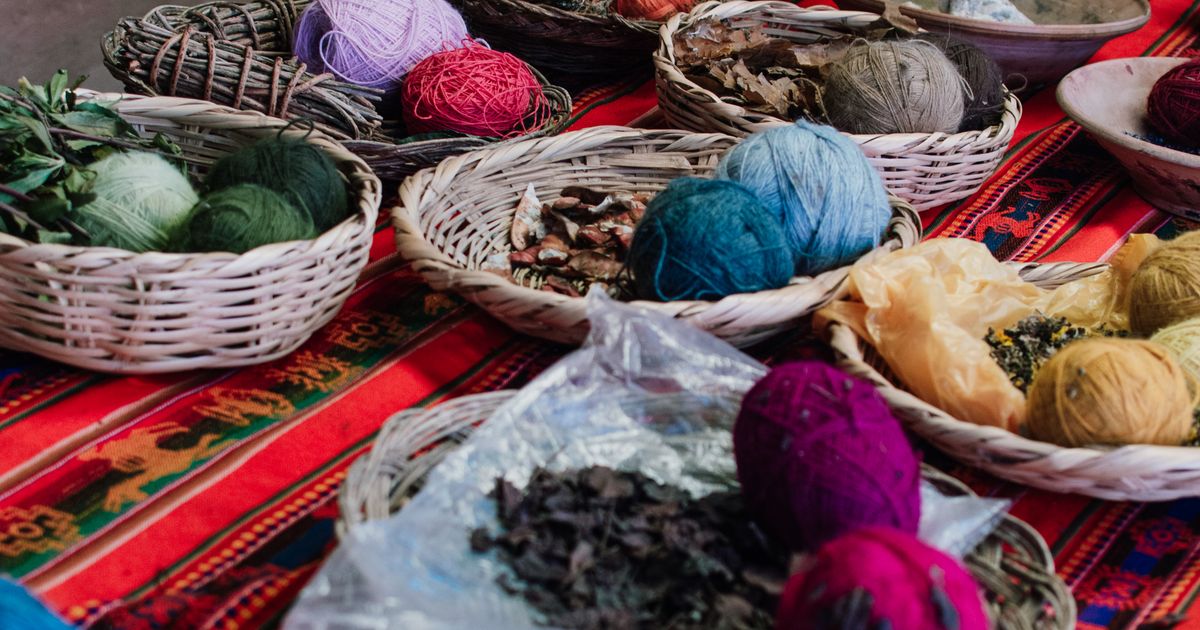
- Dyeing: Yarn is colored with natural sources. Cochineal insects give deep reds and pinks, indigo gives blue, and local plants and minerals give yellows, greens and browns.
- Weaving: The dyed yarn is woven on a backstrap loom, where the weaver's body controls the tension.
The cochineal demonstration is the crowd favorite. The weaver crushes the dried insects to show the vivid crimson, then adds lime or lemon to shift the shade in front of you. These are the same colorants the Inca and earlier Andean cultures relied on, long before synthetic dye.
Our finding: On repeat visits, the demonstrations that felt most genuine were small cooperative sessions of a handful of weavers, not large bus-group halls. Smaller groups meant time to ask questions and watch a single piece progress, which is the part most travelers remember.
If altitude is slowing you down during the standing demonstration, that is normal here. Chinchero sits higher than Cusco, so spend a day or two acclimatizing in Cusco before you arrive and move slowly while you are in the village.
The colonial church and Inca terraces
Above the weaving plaza stands the Church of Our Lady of Monserrat, a colonial adobe church built on the foundations of an Inca royal estate. Spanish builders raised it in the early 17th century, on stonework tied to the 15th-century Inca ruler Tupac Inca Yupanqui, who used Chinchero as a country estate. The result is a single site where Inca and colonial history sit on top of each other.
Inside, the ceilings and walls carry floral and religious paintings in faded reds and golds. Photography is usually restricted, so plan to simply look. Outside, the plaza opens onto the real showpiece: broad agricultural terraces cut into the hillside.
These terraces were engineered to farm a steep, cold, high-altitude slope, creating flat growing beds and managing water and frost. Walking their edges gives you a sense of scale that photos flatten. For another striking example of Inca farming engineering nearby, pair Chinchero with the salt pans of Maras and the circular terraces of Moray.
How Chinchero fits a valley itinerary
Chinchero works best as the first or last stop on a Sacred Valley route, because it sits on the high plateau on the Cusco side rather than down on the valley floor. Starting here lets you descend gradually toward Urubamba and Ollantaytambo. Ending here suits travelers heading back up to Cusco for the night.
A common one-day loop combines Chinchero, Maras, Moray and Ollantaytambo, with a stop for lunch in Urubamba. If you have more time, spread these across two days so you are not rushing each site. Our Sacred Valley itinerary for 2 days lays out a relaxed version that keeps Chinchero's weaving stop intact.
Practical notes for planning:
- Time needed: One to two hours covers the weaving demonstration, church and terraces.
- Market day: The traditional market peaks on Sunday, when nearby communities gather to trade.
- Weather: Mornings are cold at this altitude. Bring a warm layer even in dry season.
- Combining sites: Chinchero connects easily with Ollantaytambo if you are catching a Machu Picchu train later.
Discover Inca Planet builds Chinchero into Sacred Valley day tours and custom routes from Cusco, so you can slot the weaving stop into a wider plan without juggling separate transfers.
Buying textiles responsibly
The simplest responsible choice is to buy directly from a weaving cooperative rather than a resold market stall, so more of the payment reaches the person who made the piece. Handwoven textiles are expensive for a reason: a single blanket or table runner can represent days or weeks of spinning, dyeing and weaving by hand.
Price gives you a rough guide to authenticity. Fine handmade Andean textiles are not cheap even at the source; one cultural non-profit noted a fine textile in the Peruvian Andes can be acquired for as little as 60 to 100 US dollars (Cultural Survival, 2010). A heavily discounted "handwoven" piece in a tourist shop is often machine-made or synthetically dyed.
How to buy well in Chinchero:
- Ask who made it. Cooperative sellers can usually name the weaver and community.
- Check the back. Hand-woven double-faced pieces show a clean, deliberate reverse pattern.
- Smell and feel the yarn. Natural fibers and dyes feel and smell different from acrylic.
- Pay a fair price. Hard bargaining on a cooperative piece pushes money away from the artisan.
Buying thoughtfully here does more than get you a souvenir. It funds the exact tradition you came to see, and it helps keep weaving a viable livelihood for the next generation. Pisac, another Sacred Valley stop, is worth a look too if you want a larger craft market later in your route.
The clearest next step is to book a Sacred Valley tour that includes a cooperative weaving stop rather than a quick roadside photo halt, so you actually see the process from fleece to finished cloth. That single choice turns Chinchero from a passing viewpoint into the most memorable hour of the valley.
Frequently asked questions
What is Chinchero known for?
Chinchero is a Sacred Valley village near Cusco known for living Andean weaving, a Sunday market, a colonial church built on Inca foundations, and wide agricultural terraces. Weaving families still spin, dye and weave by hand.
How high is Chinchero and will I feel the altitude?
Chinchero sits around 3,750 m (12,303 ft), higher than Cusco. Many visitors feel short of breath walking uphill. Spend a day or two in Cusco first and move slowly while you are in the village.
How do I get to Chinchero from Cusco?
Chinchero lies northwest of Cusco, usually under an hour by road. Most travelers visit on a Sacred Valley day tour or private transfer that also covers Maras, Moray or Ollantaytambo.
Are Chinchero textiles authentic and worth buying?
Textiles bought directly from weaving cooperatives are handwoven with natural dyes and traditional patterns. Prices are higher than mass-market souvenirs because each piece takes days or weeks of hand labor.
When is the Chinchero market?
The main traditional market runs on Sunday, when nearby communities gather to trade. Smaller craft markets and cooperative workshops operate on other days for visitors.


